


How much black currant extract per day?
 2026-01-15 15:55:01
1. Learning about Black Currant Extract as an Ingredient.
It is also worthwhile to know that Blackcurrant Extract Capsules are not a single standardized material before getting to the discussion on the amount to take on a daily basis. The amounts of intake are varied per day based on:
Fruit, seed, leaf, etc.
Process of extraction (water, ethanol, oil-pressing)
Focus and centralization.
Intended product category
Consequently, the amounts of usage are not often talked about in absolute terms but rather in approximations.
If you’re intrigued by Ciyuan Bio, Claim your free sample today! Need technical support for formulation or OEM/ODM solutions tailored to your brand? Reach out to us now or contact selina@ciybio.com.cn —we’re ready to collaborate.
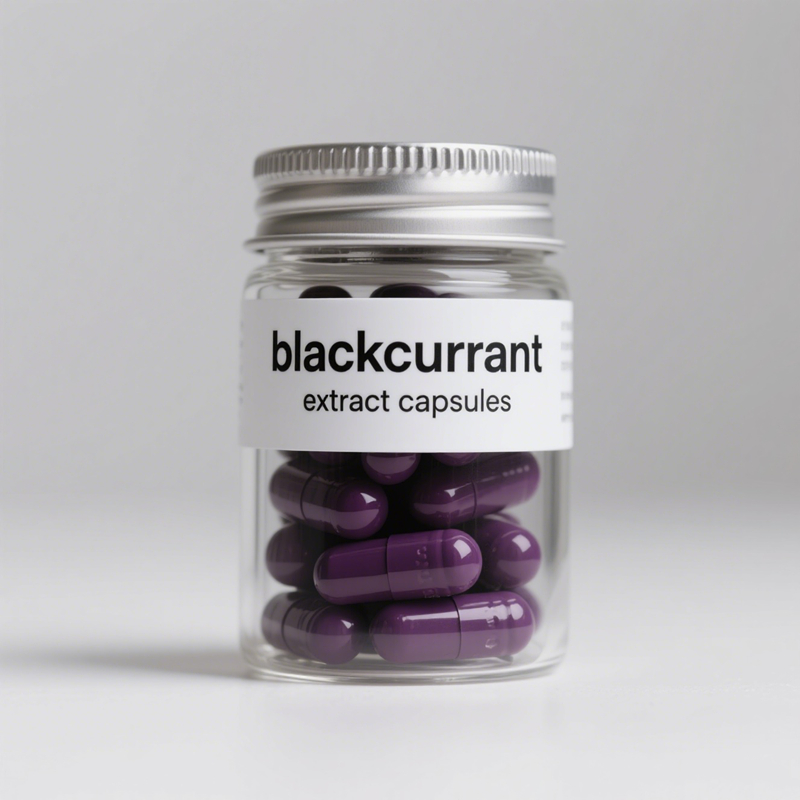

Blackcurrant Extract Capsules
Specifications: Customized
MOQ: 100 Bottles
Packing: 100bottles/carton or Customized
Certificate: ISO22000; HALAL; KOSHER; FDA
Shipping: Express;Sea; Air
Payment:TT;LC;West Union;Paypal;Alipay
Samples:1 bottle free sample for test
Shelf life: 24 Months in The Cool Dry Place
All of our products can be customized with raw materials and finished products such as capsules, tablets, pills, and small packaging according to your requirements! Ciyuan can also do free design,OEM packing, and private label. Our plant extract are crafted with your unique needs and are packed with the power of plants.
Reach out to us and Claim your free sample today!
2. Typical Usage Levels and Forms of the Common ones.
Black Currant Fruit Extract (Powder or Liquid) 2.1.
The most common form of fruit extracts include fruit extracts in food and in supplements. They can either be standardized on naturally occurring compounds like anthocyanins or just concentrated fruit solids.
Common typical industry applications:
Powdered extract: 100-600 mg per day.
Liquid extract (concentrated): concentrations vary depending on the concentration, and are often equal to corresponding ranges of weight (dry).
These levels are a commonplace on capsules, tablets, drink mixes and functional foods.
2.2 Black Currant Seed Extract (Oil-Based).
Seed extract is typically provided in oil form and included in softgel preparations or make-up products.
Common applications within the industry:
Black currant seed oil: 500-2000mg/day in supplements.
This scale indicates general formulation habit as opposed to intake advice.
Whole-Fruits or Low-Concentration Extracts 2.3.
To be closer to the original botanical material, some products incorporate lightly concentrated extracts or whole-fruit powders.
Characteristic use features:
Increased gram level addition into food items.
Reduced specific compound concentration.
Most commonly placed as a contributor of flavor or color.
3. Amounts That are Affected Daily.
The extraction strength and standardization are presented (3.1).
A highly concentrated extract will need a small amount of inclusion as compared to a minimally processed powder. For example:
A standardized extract can be applied in lesser amounts.
An unstandardized powder can be found in increased amounts of milligrams.
The manufacturers are specifying how to use it by referring to specification sheets as opposed to making general assumptions.
3.2 Product Category and Format
The dosage is very diverse depending on the route of extract administration:
Blackcurrant Extract Capsules/Tablets: reduced amounts of milligrams in the capsules based on space.
Powders and beverages: increased quantities can be made.
Gummies: good portions that are balanced with flavour and texture.
Cosmetics: topically, the use is not subject to the per day consumption patterns.
3.3 Regional Regulatory Frameworks.
The regions do not expect the same use of botanical ingredients:
There are markets that focus on conventional use ranges.
There are those that are based on food-based consumption equivalency.
Labeling requirements affect the way the amounts are stated to the consumers.
Consequently, product labels tend to be a portrayal of compliance strategy as opposed to global standards.
4. Functional Foods and Beverages Daily Amounts.
Black currant extract is commonly employed in food and beverage formulations as a support in color and flavor and/or formulations and not as a measure of consumption.
Typical characteristics:
Consumed on a per-serving basis, not on a per-day basis.
Adjusted taste/stability levels of inclusion.
Frequently used together with other fruit juices.
As an illustration, a drink can have a small dose of black currant extract per serving, and the dose should be taken daily based on the drinking patterns.
5. Combination Products and Combined Formulations.
Black currant extract is hardly used on its own. It is usually mixed with other botanical or fruit based ingredients.
Consequences on everyday amounts:
The individual ingredient levels can be smaller.
The total botanical content is distributed in several components.
Stress is made on a balanced formulation as opposed to single-ingredient orientation.
It is a strategy that corresponds to the industry trends of complex blends of plants.
6. Labeling and Consumer Communication.
6.1 The way amounts are generally presented.
The labels of products can be used to indicate black currant extract in various forms:
In a definite number of milligrams.
As a constituent of a proprietary mixture.
As a component that is not quantitatively highlighted (in foods).
This difference is an expression of the marketing approach, the regulatory factors, and product format.
The problem of overinterpretation should be avoided by the researcher (Courtney, 2014).<|human|>The researcher should avoid the overinterpretation problem (Courtney, 2014).
Industry-wise, it is notable that the consumers should be aware of:
Formulation design is represented by listed amounts.
Increase in numbers does not necessarily reflect an increase in quality.
There are several purposes of botanical extracts.
Transparency and trust are achieved through the use of clear, neutral labeling.
7. Context Safety and Quality (Industry Perspective)
When sourced and prepared in line with the relevant standards, Blackcurrant Extract Capsules is an ingredient that is highly utilized as a food-grade ingredient.
Best practices in the industry are:
Supplier documentation
Batch consistency testing
Food safety system compliance.
The discourse of daily amounts is usually put in context within some accepted patterns of use, not in claims based on outcomes.
8. Comparison Whole Black Currant Consumption.
To put it into perspective, complete black currants are usually eaten in the form of:
Fresh berries
Juices
Preserves and concentrates
Extracts are not intended to precisely imitate the intake of whole-foods; rather, they are meant to provide convenience and flexibility in formulation. This difference should be taken into account during the interpretation of daily amounts.
9. Industry Stakeholder Practical Implication.
The correct answer to the question, how much black currant extract per day, is:
It varies according to the extract type, concentration and the intended use.
No universality of amount. Rather, day to day amounts are calculated as:
Ingredient specifications
Product format
Regulatory environment
Consumer use patterns
Such a strategy enables black currant extract to be a versatile and popular botanical ingredient.
Conclusion
The range of Blackcurrant Extract Capsules daily dosages used in different industries and applications is different, but usually low hundreds of milligrams are used in concentrated fruit extracts, or more gram weight is used as inclusions in seed oils or food products. These figures are not about health-related advice but formulation practices. Knowing the context of these numbers can make manufacturers, buyers and consumers read the labels of products in a more responsible way.
Contact us
If you’re intrigued by Ciyuan Bio, Claim your free sample today! Need technical support for formulation or OEM/ODM solutions tailored to your brand? Reach out to us now or contact selina@ciybio.com.cn —we’re ready to collaborate.