

How many mangosteen capsules per day?
 2026-01-28 15:33:16
1. Conceptualization of Mangosteen Capsules as a Product Category.
In most countries, the mangosteen capsules are considered dietary supplements or botanical-based products. Usually they are generated using:
Mangosteen rind of fruit (pericarp) powder.
Extraction of standardized botanical extracts.
Whole-fruit dried powder
Capsule formats prove to be convenient, portable and portioned in the right way. Industry wise, capsules enable manufacturers to package mangosteen in standardized and scalable variant apt to be distributed worldwide.
If you’re intriguedby Ciyuan Bio, Claim your free sample today!Need technical support for formulation or OEM/ODMsolutions tailored to your brand?Reach out to usnowor contact selina@ciybio.com.cn—we’re ready to collaborate.

Mangosteen Capsules
Specifications: Customized
MOQ: 100 Bottles
Packing: 100bottles/carton or Customized
Certificate: ISO22000; HALAL; KOSHER; FDA
Shipping: Express;Sea; Air
Payment:TT;LC;West Union;Paypal;Alipay
Samples:1 bottle free sample for test
Shelf life: 24 Months in The Cool Dry Place
All of our products can be customized with raw materials and finished products such as capsules, tablets, pills, and small packaging according to your requirements! Ciyuan can also do free design,OEM packing, and private label. Our plant extract are crafted with your unique needs and are packed with the power of plants.100% vegan, gluten- and lactose-free.
Reach out to usand Claim your free sample today!
2. Why “Per Day” Amounts Vary Across Brands
The mangosteen capsule does not have a standard dosage of daily intake. Alternatively, the range of usage is dependent on a number of non-medical factors:
Concentration of raw materials (powder/extract)
Capsule size (e.g., 300 mg, 500 mg, 750 mg)
Manufacturing standards
Target market preferences
Consequently, the quantity of suggested capsules per day is prone to formulation design instead of any universal medical standard.
3. Common practices in Supplement Industry Labelling.
Majority of the capsules products of mangosteen have a label with a section of Suggested Use or Serving Size. Regarding industry knowledge, the kind of information is to provide general guidance to the consumer, rather than medical advice.
Usual forms of labels are:
"Take 1-2 capsules per day"
Serving recommendation: 2 capsules per day.
"1 capsule, once or twice daily"
These are influenced by regulatory compliance, internal product testing and marketing positioning. They also depend on the similarity of products with botanical name under the same category.

4. Number of Capsules vs. Total Amount of Ingredients.
Explaining the number of Mangosteen Capsules per day, the industry representatives are more interested in the overall amount of the ingredients than in the number of capsules.
For example:
A 500 mg per capsule product can imply reduced capsules.
A capsule containing 300mg of a product can have a higher number of capsules.
This method enables the brands to be flexible and at the same time have uniformity among various sizes of capsules and formulations.
5. The variations between Powder-Based and Extract-Based Capsules.
Mangosteen capsules can either be of raw powder or concentrated extracts, which influence the description of the daily use.
Capsules containing powder: Tended to be listed more often with more capsules because of the less concentration.
Extract-based capsules: They usually take fewer capsules in a day.
This differentiation, in the industry perspective, plays a major role in labeling correctly, educating consumers, and documenting international trade.
6. Use of Regional Regulations and Market Standards.
The amount of recommended capsules per day also varies between markets like North America, Europe, and Asia based on the age brackets of the market.
Regulatory authorities tend to demand:
Well-defined service amounts.
On a per serving basis, ingredients quantity.
Non-disease-related non-medical language.
This means that a certain amount of a product, which is a normal one-day quantity in one part of the world might not be the same in another part of the world, depending on the formulation of the product.
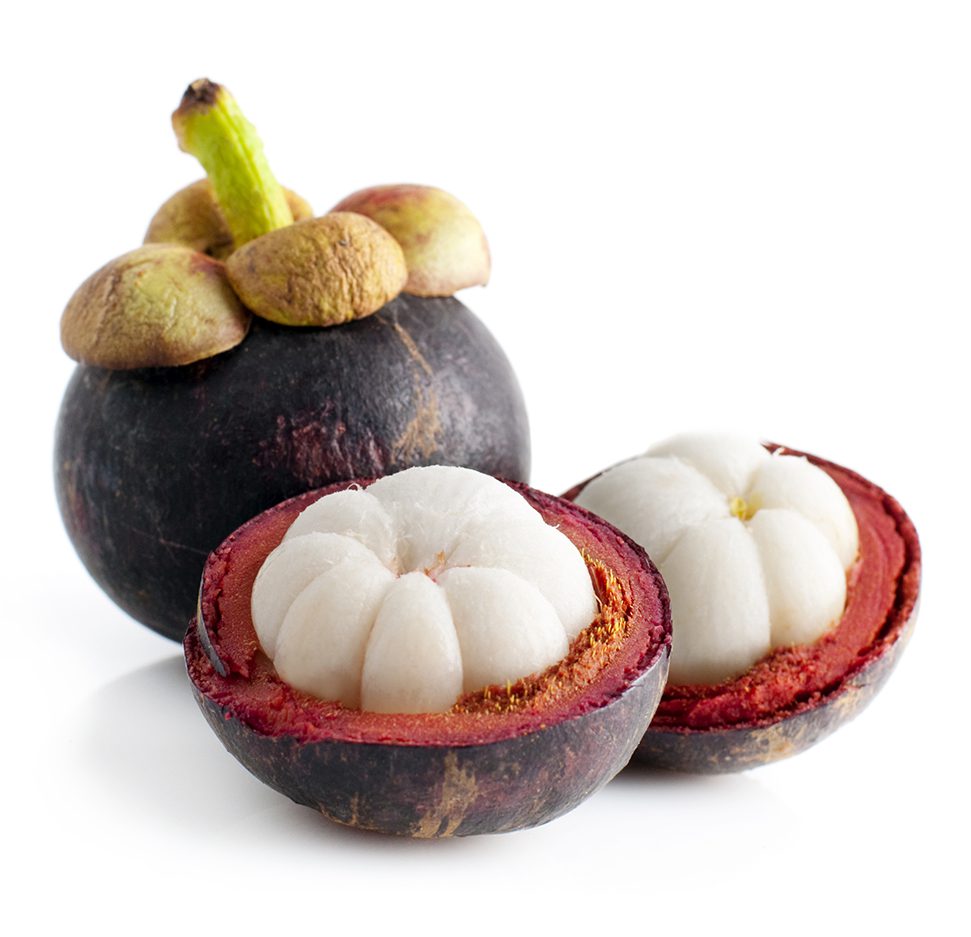
7. Lifestyle Positioning and Patterns of Consumer Usage.
Practically, mangosteen capsule is commonly placed within a day to day chore, just like other fruit-based or botanical supplements.
Research in the industry reveals that consumers are likely to:
Keep things simple and once or twice a day.
Ridiculous regimenting of doses should be avoided.
Search consistency, ease of use.
This taste affects the number of capsules per day that is regularly recommended by a brand with preference given to clarity rather than complexity.
8. Bulk Supply and Private-Label Issues.
When it comes to the manufacturers of the products with a private label, the number of capsules per day becomes a significant aspect of product customization.
Factors include:
Target retail price
Capsule size availability
Label space and compliance requirements.
Competitive positioning
Suppliers of bulk ingredients usually come with guidelines of the range of usage which are then adjusted to their range of formulations and markets.
9.Important lessons to Industry Professionals.
Whenever posing the question: How many mangosteen capsules per day, the answer with the highest precision in the industry is that the daily capsule quantities are determined by formulation, capsule strength and labeling criteria, not by one definitive regulation.
In the case of manufacturers, distributors, and retailers, it is all about being consistent, compliant and communicating effectively again that the product fits in the day to day life of the consumers without purporting to be something it is not.
Conclusion
The Mangosteen Capsulescome in different products and market formats as a convenient form of botanical supplement with a wide range of products and capsules per day. Instead of targeting a specific number, industry standards concentrate on overall quantity of ingredients, type of formulation and their conformity with regulations.
References
-
Food and Agriculture Organization of the United Nations (FAO). Botanical ingredients and global food markets.
-
European Food Safety Authority (EFSA). Guidance on the labeling of food supplements.
-
U.S. Food and Drug Administration (FDA). Dietary Supplement Labeling Guide.
-
Journal of Food Science & Nutrition. Overview of mangosteen as a botanical ingredient.
Contactus
If you’re intrigued by Ciyuan Bio, Claim your free sample today!Need technical support for formulation or OEM/ODMsolutions tailored to your brand? Reach out to us now or contact selina@ciybio.com.cn—we’re ready to collaborate.